
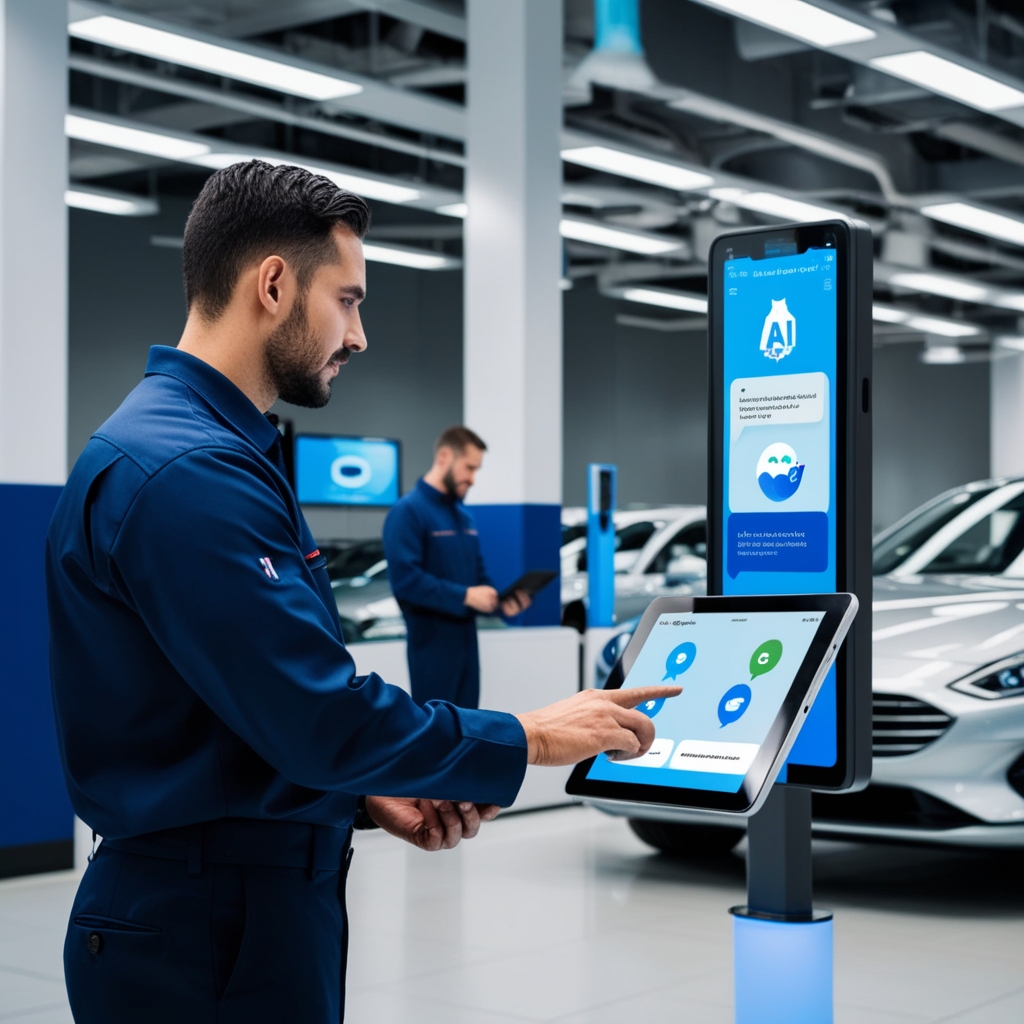
Sixty-one percent of automotive customers say responsiveness is one of the top factors in their buying decision. Not price. Not inventory. Not even location — speed of response.
That statistic, from CallRail’s 2026 Auto Marketing Trends Report, should be a wake-up call for every dealership GM, BDC manager, and auto service business owner reading this. Because while customers are making decisions in minutes, most automotive businesses are still taking hours — sometimes days — to follow up on leads.
The gap between customer expectations and business response times is where deals die. And in 2026, AI-powered follow-up is the single most effective way to close it.
The Speed Gap Is Costing You Deals
Here’s how modern customers shop for automotive services: they search on their phone, contact three to five businesses at once, and go with whoever responds first. It’s not complicated. It’s not unfair. It’s just fast.
The problem is that most dealerships and service shops aren’t built for speed. Leads come in through web forms, missed calls pile up during peak hours, and after-hours inquiries sit untouched until the next morning. By then, your prospect has already booked with someone else.
Consider the math:
- A lead contacted at 7 PM on a Tuesday goes unanswered until 9 AM Wednesday — that’s 14 hours of silence.
- During that window, the customer has likely received responses from two or three competitors.
- Studies consistently show that responding within five minutes makes you 21 times more likely to qualify that lead versus waiting 30 minutes.
The speed gap isn’t just inconvenient. It’s expensive. Every hour of delay is a direct hit to your conversion rate, your cost per acquisition, and ultimately your revenue.
AI Moved from Buzzword to Baseline
In 2025, AI in automotive marketing was still experimental. Businesses were testing AI-generated ad copy, experimenting with chatbots, and cautiously exploring automation tools. It was the “let’s try it and see” phase.
2026 is different. AI is no longer a nice-to-have — it’s embedded across the marketing stack. According to CallRail’s research, 66% of auto businesses are increasing their marketing spend this year, with content creation and AI-driven tools receiving the largest budget increases.
This shift isn’t happening because AI is trendy. It’s happening because the businesses that adopted AI tools early are now measurably outperforming those that didn’t. They’re responding faster, qualifying leads more accurately, and converting at higher rates — all while spending less per lead.
The automotive businesses still treating AI as optional are watching their competitors pull ahead. And the gap is widening every quarter.
Three AI Follow-Up Strategies That Actually Work
Not all AI tools are created equal. The ones that deliver real ROI for automotive businesses focus on one thing: making sure no lead goes unanswered. Here are three strategies that are working right now.
1. AI Voice Assistants for After-Hours Call Coverage
Your best leads don’t call during business hours. They call at 6:30 PM after work, on Saturday mornings, or during their lunch break when your team is already handling walk-ins. Without after-hours coverage, those calls go to voicemail — and most customers won’t leave one.
AI voice assistants solve this by answering every call, collecting key information (name, vehicle, service needed, preferred callback time), and either scheduling appointments directly or sending a prioritized summary to your team for immediate follow-up in the morning.
The result: zero missed calls, 24/7 coverage, and a customer experience that feels professional and responsive even when your staff has gone home.
2. Smart Call Summaries That Trigger Instant Team Follow-Up
AI doesn’t just answer calls. It listens to them. Modern AI call tracking tools automatically transcribe and summarize every conversation, flagging high-intent phrases like “I need this done today,” “I’m comparing prices,” or “Can I bring it in this week?”
These summaries are pushed to your BDC team or service advisors in real time, with the hottest leads highlighted at the top. Instead of your team manually reviewing call logs — or worse, guessing which leads to follow up with first — AI handles the triage.
This means your best people spend their time on the leads most likely to convert, rather than working through a list in the order calls came in.
3. Automated Lead Scoring That Prioritizes High-Intent Inquiries
Not every form submission or phone call has the same value. A customer asking about a specific vehicle with a trade-in is worth more immediate attention than someone browsing your general inventory page.
AI-powered lead scoring analyzes behavioral signals — pages visited, time on site, form responses, call sentiment — to assign each lead a priority score. Your team sees a ranked list, not a chronological one. High-intent leads get called back in minutes. Browsers get nurtured through automated email or text sequences.
The impact is significant: dealerships using AI lead scoring report 30–40% improvements in lead-to-appointment conversion rates because they’re reaching the right people at the right time.
The Video + AI Content Combo
Follow-up isn’t just about phone calls. The content you produce — and how quickly you produce it — plays a direct role in keeping leads warm and moving them toward a decision.
CallRail’s data shows that video (59%), PPC (53%), and SEO (49%) remain the top channels driving new business for auto companies in 2026. What’s changed is how AI accelerates content creation across all three:
- Video: Short-form, authentic video consistently outperforms polished ads. AI tools help auto businesses script, edit, and caption videos in a fraction of the time it used to take. A 60-second walkaround of a new arrival, posted the same day it hits the lot, generates more engagement than a professionally produced commercial released two weeks later.
- PPC: AI-optimized ad campaigns adjust bids, targeting, and creative in real time based on what’s actually converting. No more monthly reviews and manual tweaks.
- SEO: AI-driven content strategies identify the exact search queries your customers are using and produce optimized content that ranks. This isn’t keyword stuffing — it’s building genuine authority in your market.
The businesses winning in 2026 aren’t choosing between video, paid ads, and organic search. They’re using AI to do all three simultaneously, at a pace that was impossible with manual workflows.
Multi-Channel Is Mandatory
Your customers aren’t in one place. They’re on Google, Instagram, YouTube, Facebook, TikTok, email, and SMS. Reaching them means showing up consistently across multiple channels — and in 2026, that’s no longer optional.
CallRail’s report highlights that automotive businesses are expanding into organic social, influencer partnerships, text and SMS marketing, email sequences, and video platforms. The businesses seeing the best results are the ones present across four or more channels, with consistent messaging and coordinated timing.
The challenge has always been bandwidth. A five-person marketing team at a dealership group can’t realistically manage content across eight platforms while also handling lead follow-up, campaign optimization, and reporting.
AI changes that equation. Here’s how:
- Content repurposing: A single blog post becomes a social caption, an email snippet, a video script, and an ad variation — all generated in minutes.
- Scheduling and distribution: AI tools manage posting schedules across platforms, optimizing for the times your specific audience is most active.
- Performance analysis: Instead of pulling reports from five different dashboards, AI consolidates metrics and surfaces what’s working and what isn’t.
Multi-channel presence used to require a multi-person team. With AI, a small team can operate like a large one.
Response Time vs. Conversion Rate: The Numbers
The relationship between response time and conversion isn’t linear — it’s exponential in the first few minutes, then drops off a cliff.
| Response Time | Relative Conversion Rate | What Happens |
|---|---|---|
| Under 1 minute | Highest | Customer feels prioritized, often books immediately |
| 1–5 minutes | Very high | Still top of mind; strong likelihood of engagement |
| 5–30 minutes | Moderate | Competitor responses start arriving; attention shifts |
| 30–60 minutes | Low | Customer has likely engaged with a competitor |
| 1+ hours | Very low | Lead is effectively cold; recovery rate drops below 10% |
The takeaway is simple: if you’re not responding within five minutes, you’re losing the majority of your potential conversions to businesses that are. AI follow-up tools make sub-minute response times achievable for every business, regardless of team size.
AI Isn’t Replacing Your Team — It’s Covering the Gaps
One of the biggest misconceptions about AI in automotive is that it replaces staff. It doesn’t. What it does is cover the gaps that no human team can fill:
- After-hours coverage: AI handles the 40% of calls that come in when your office is closed.
- Peak demand buffering: During your busiest hours, AI ensures no lead falls through the cracks while your team handles walk-ins and existing customers.
- Follow-up consistency: Humans forget. They get busy. They prioritize the customer standing in front of them over the one who called an hour ago. AI never forgets and never deprioritizes.
The most effective automotive businesses in 2026 aren’t choosing between human service and AI efficiency. They’re combining both: AI handles the speed and consistency layer, humans handle the relationship and closing layer.
How to Start This Week
You don’t need a six-month implementation plan or a massive technology overhaul. Here’s a three-step quick start you can execute this week:
Step 1: Audit Your Current Response Time
Have someone submit a lead through your website at 7 PM tonight. Check how long it takes for your team to respond. If it’s more than five minutes during business hours — or more than 30 minutes after hours — you have a problem that’s costing you money right now.
Step 2: Deploy AI Call Coverage for After-Hours
Start with the lowest-hanging fruit. Set up an AI voice assistant that handles calls when your team isn’t available. This single change can recover 15–25% of leads that are currently going unanswered.
Step 3: Set Up Automated Lead Summaries
Implement AI call tracking that transcribes, summarizes, and prioritizes every inbound call. Your team starts each day with a ranked list of leads to call back, with the highest-intent prospects at the top.
These three steps can be implemented in days, not months. And the ROI is typically visible within the first two weeks.
The Bottom Line
The automotive businesses that will dominate their markets in 2026 and beyond aren’t necessarily the ones with the biggest ad budgets or the most inventory. They’re the ones that respond first, follow up consistently, and use AI to make sure no opportunity slips through the cracks.
AI-powered follow-up isn’t a future trend. It’s today’s competitive edge. The only question is whether you’ll be the business that responds in 30 seconds — or the one that lets the lead go cold overnight.
Ready to See What AI-Powered Marketing Can Do for Your Business?
Get a free AI brand audit from V12 AI. We’ll analyze your current digital presence, identify where leads are falling through the cracks, and show you exactly how AI-powered tools can accelerate your response times and increase your conversion rates — no commitment, no pressure, just data-driven insights you can act on today.
Editor's Note: This author is an AI-powered persona created by V12 AI. This profile combines the expertise of multiple subject matter specialists and AI models to provide comprehensive, accurate, and insightful analysis on this topic. David Park is V12 AI's AI & Marketing Technology Analyst, tracking the intersection of artificial intelligence and digital marketing since 2020. He covers Google algorithm updates, AI search optimization, and emerging martech tools. David previously worked at a Big Four consulting firm advising Fortune 500 companies on digital transformation.